50+ street interviews on SF homelessness, and a 30-day housing bridge
What stops people from getting help in time, and where a small intervention still changes the outcome.
In San Francisco, losing a job can mean losing housing within weeks. With a team of three, I researched what stops people from getting help in time, and we designed a 30-day housing bridge that triggers on time risk, not paperwork.
This one is research, not a shipped product: more than 50 street interviews, time with the Coalition on Homelessness and the city’s Homeless Outreach Team, and public data, turned into a data story and a 30-day housing-bridge proposal. It ends at the proposal on purpose. The deliverable is the understanding.
01Walking in San Francisco
We started on foot, pairing public data with the stories of the people living the problem.
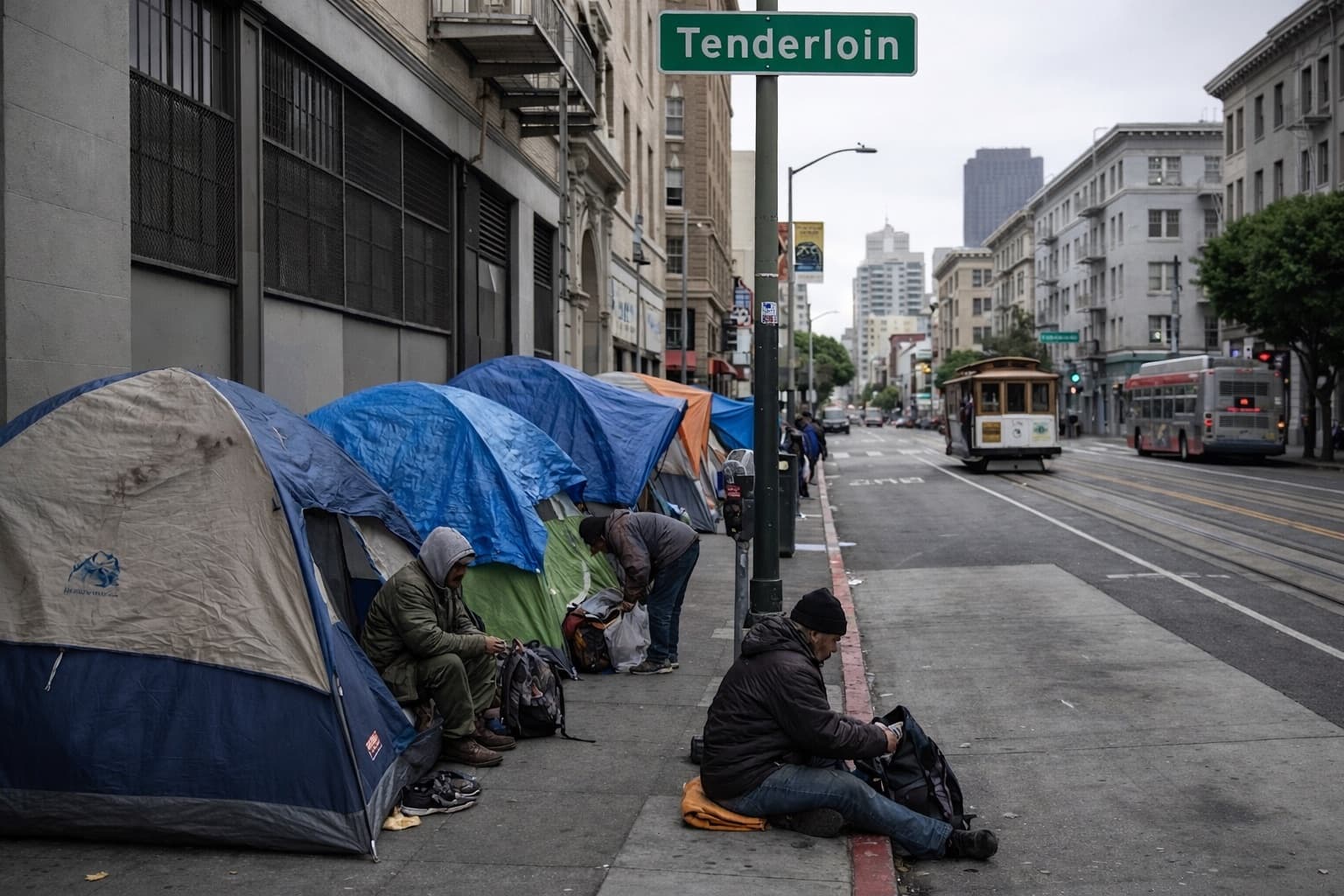
Generated with Gemini Nano Banana Pro.
02Why this problem matters
Timing matters more than income. The risk of homelessness is less about how much someone earns and more about how fast support reaches them after a shock.

03Who is affected
Laid-off engineers and laid-off line workers land in the same 30 days. That window is the whole target.
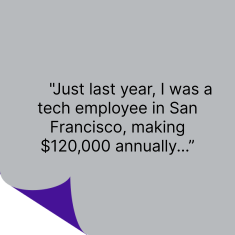
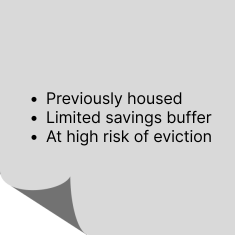
What prevents people from accessing housing support fast enough to avoid homelessness?
04Research and methods
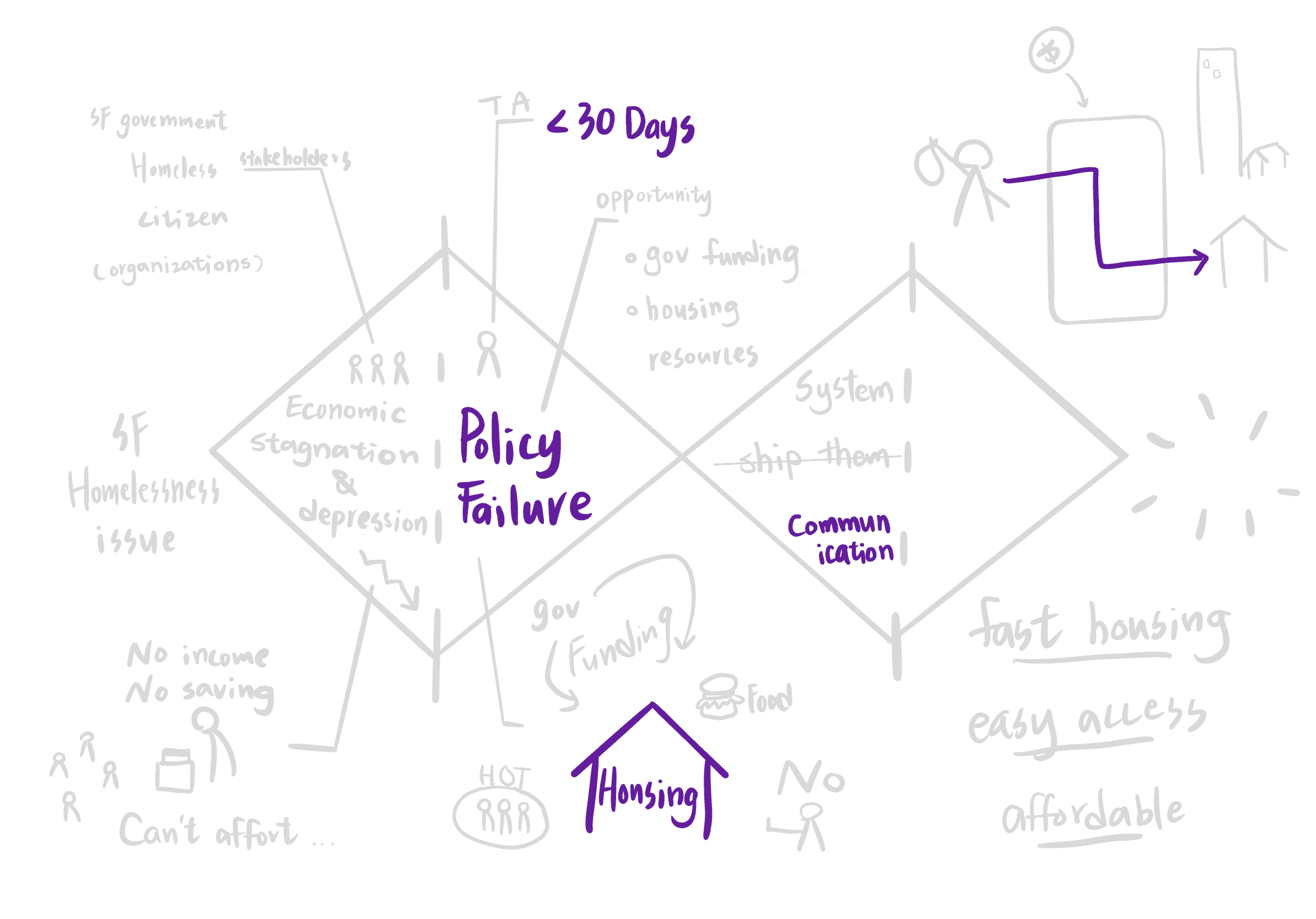
We went wide before narrowing: people on the street and in shelters, the orgs that run the response, and the public budget and policy underneath it.
Interviews, more than 50 people
We met people on the street, in the shelter, and who had experienced homelessness. More than 50 in total.
Shadowing and org interviews
To understand the higher level, we contacted the Coalition on Homelessness, the Homeless Outreach Team, and people working for the government, and met them in person.
Secondary research, budget and policy
To learn how the system works, I dug into the public documents and came to understand the pros and cons of Coordinated Entry.
05Key insights
The system reacts too late. Housing support should intervene during instability, not after collapse.
- 1.Time is the real bottleneck
- 2.Access is not the same as awareness
- 3.Rules punish instability
- 4.Shelters are not perceived as a safe fallback
How might we help newly unemployed SF residents access temporary housing support within the first 30 days, before they fall into long-term homelessness?
06Solutions
The timeline is the leverage. Job loss, then housing loss, then homelessness. Put the help in before the second step and the third one stops being automatic.
The three concepts below were a team output. I led the research and the solution framing.
Access by time risk, not paperwork
Intended effect
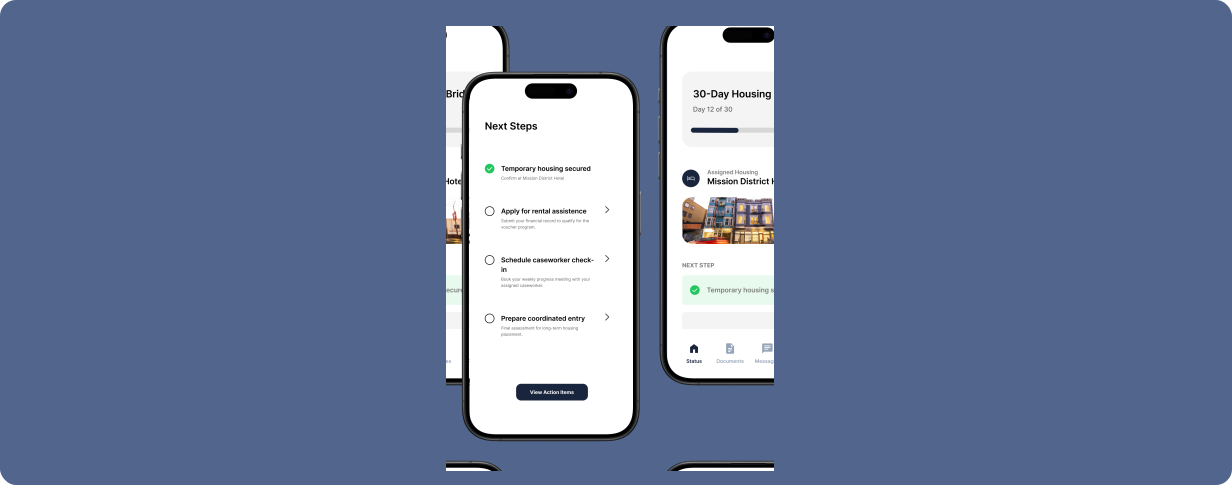
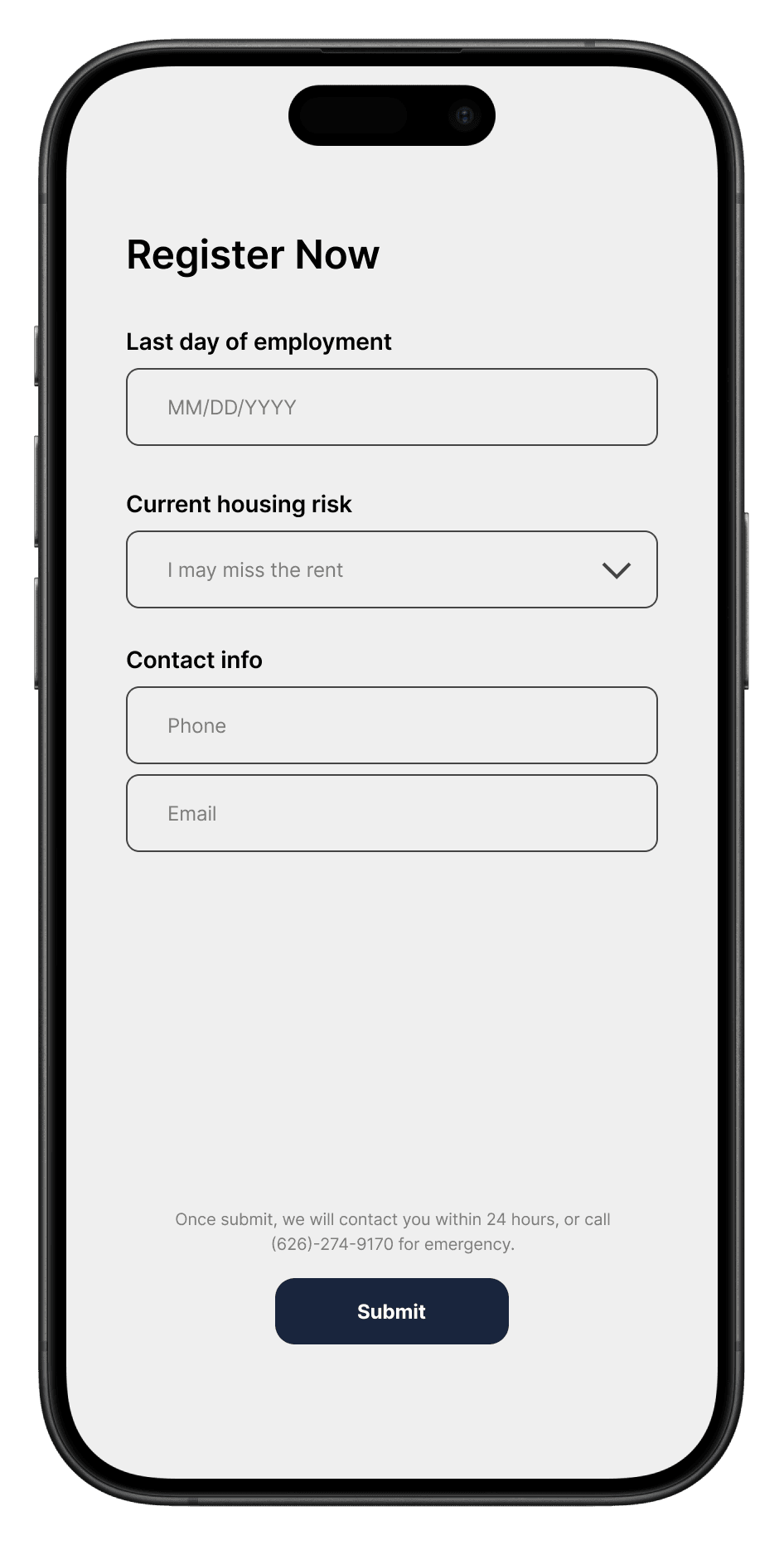
Access is granted based on time risk rather than eligibility documentation.
Why this matters
The current system waits until someone qualifies, which is usually after the point they could have been caught. The change is when help starts, not who gets it.
Temporary housing, framed as transitional
Intended effect
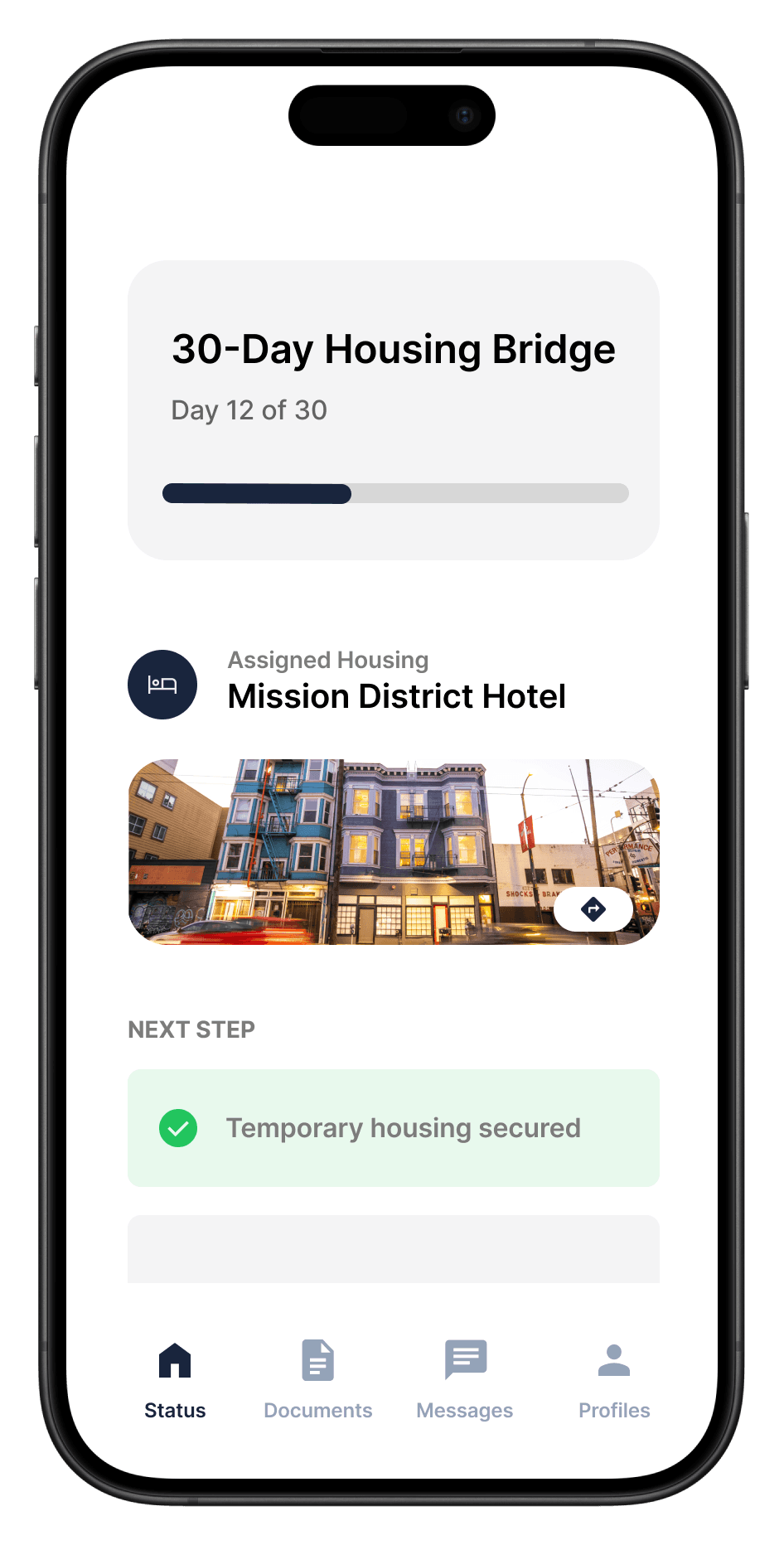
Someone gets a bed tonight and still knows what day 31 looks like.
Why this matters
Research showed that unclear shelter rules often discourage participation. Making the temporary nature explicit builds trust while preserving forward momentum.
A deliberate re-entry into formal systems
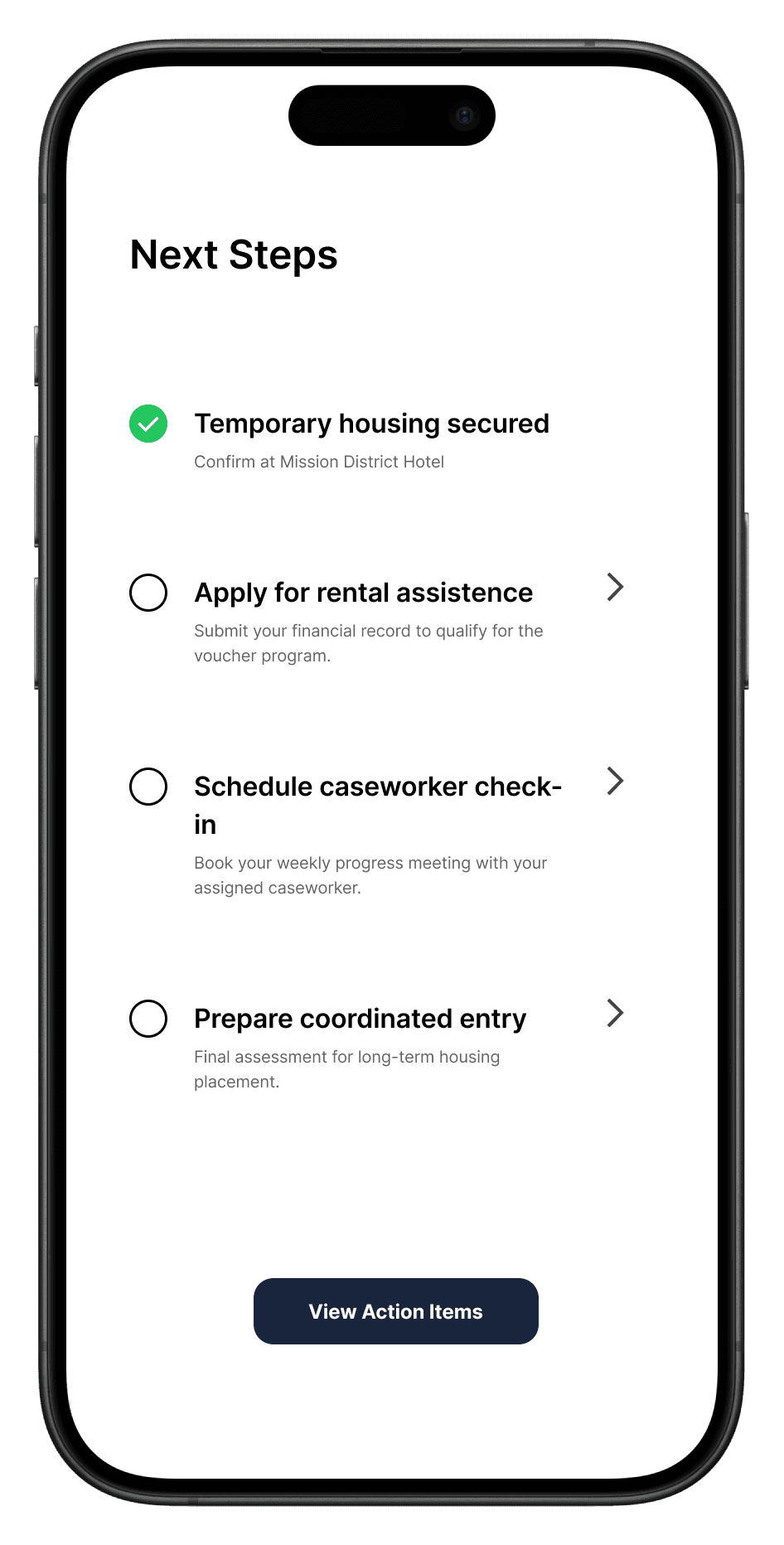
Intended effect
Users return to caseworkers, documentation, and coordinated entry with clarity and agency rather than exhaustion.
Why this matters
Systems designed for stability often fail people during instability. This design creates a deliberate re-entry point.
07Reflection
Leverage to change the system, not solve the problem
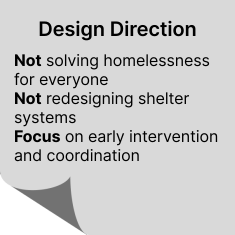
This project taught me that effective system design is not about solving the entire problem, but about finding the right leverage to change how the system behaves. Rather than attempting to “fix homelessness,” I focused on a specific intervention point, the first 30 days after job loss, where a small shift in timing and access could significantly alter long-term outcomes.
Designing dignity into systems
Through interviews, I learned that many people avoid shelters not because they reject help, but because current systems often require them to give up autonomy, belongings, or clarity about their future. This insight pushed me to treat dignity as a functional requirement, not an abstract value.